
Garden Room Ideas Across Oxfordshire: 7 Sectors Making the Most of the Space
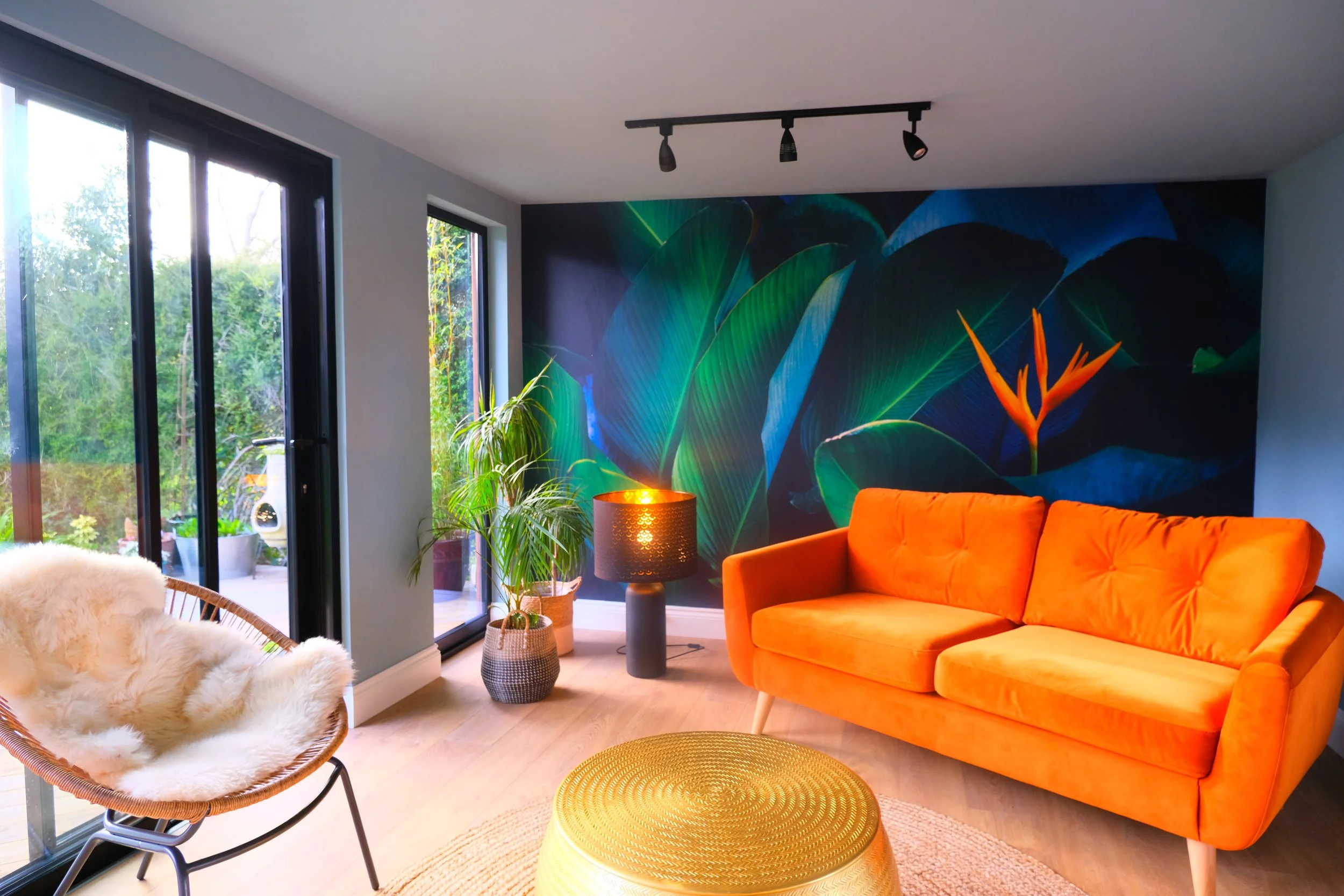
Across Oxfordshire, a quietly growing number of professionals are running real businesses from buildings at the bottom of their gardens, not as a workaround but as the actual setup. We've built garden rooms across the county for therapists, hair stylists, yoga teachers, tutors, photographers, financial advisers and cake makers, and what's struck us over the years is how different the requirements look from one sector to the next. The same building shell, finished and fitted out for the work it's meant to support, can become a confidential consultation room, a Pilates studio or a small-scale licensed kitchen.
This piece is a sector-by-sector look at how Oxfordshire professionals across seven distinct industries are using garden rooms to do work that doesn't fit inside the main house. It isn't an inspirational round-up of pretty rooms with mood lighting. It's a working guide to what each sector needs from the space, what the design considerations are, and where the practical lines sit. If you're somewhere on the journey from "the spare bedroom is pretending to be an office" to "we need a proper space for this", you should recognise yourself in at least one of the seven.
One note before we start. Planning permission and building regulations apply differently depending on use, and regular client visits in particular can change the regulatory route. We've covered the regulatory side in detail in our guide to garden room regulations in Oxfordshire, and we'll flag where it matters as we go.
1. Therapists, counsellors and wellness practitioners
This is the sector where we recognise the requirement within about five minutes of the first consultation. The shape of what a working therapist needs from a building is distinctive and consistent across the discipline, which is why so many of our most carefully designed projects have ended up being therapy rooms.
Confidentiality is the foundation. Visual privacy from the main house and from neighbouring properties, acoustic privacy so that conversations don't carry, and a route in for the client that doesn't involve walking past the family kitchen or through a hallway with school bags and dog leads. The cleanest setup is a separate side or back access, marked clearly enough that a first-time client knows where they're going. A small porch or covered waiting area outside the door is more useful than people expect. Clients arriving for therapy are often already in some state of distress, and waiting on a wet doorstep adds to it.
Inside, the considerations soften. Calm finishes, warm neutrals, soft layered lighting rather than overhead glare, natural light from a direction that doesn't require closed blinds, and seating arrangements that suit the discipline. A discreet toilet matters more than people realise. Sessions run for fifty minutes and clients book back-to-back, and the alternative is asking the person who has just disclosed something difficult to walk back through your kitchen, which isn't really an alternative.
Oxfordshire has an unusually high concentration of qualified practitioners, partly because of the city's academic environment and partly because the surrounding villages support both private practice and home-visit work. The sector spans more than just counselling. We've built spaces for hypnotherapists, life coaches, executive coaches, nutritional therapists, reflective practice supervisors registered with the BACP, EMDR specialists and somatic practitioners. The requirements vary at the margins but the core stays the same. Build for confidentiality and dignity, and you've built for the work.
2. Hair, beauty and aesthetics professionals
The transition from spare bedroom salon to garden room salon is one of the most consistent growth patterns we see. A practitioner trains, qualifies, builds a client base from the conservatory or the kitchen, and at some point realises that the operation has outgrown its surroundings. The clients have noticed too.
What a home-based salon actually needs is closer to a commercial fit-out than most homeowners expect. Client-facing entrance separate from the family front door, proper task lighting that flatters under the colours and angles the work requires, plumbing for hair washing or treatment hygiene, ventilation appropriate to the products being used (which matters significantly for hair colour, gel nails and anything chemical), storage for stock that often runs into thousands of pounds, and a finish quality that holds up to repeated commercial cleaning. Stylists know within a week whether the workspace is functional. The clients form their opinion within the first appointment.
The category is broader than people sometimes assume. We've worked with hair stylists, barbers, colour specialists, balayage and extension experts, nail technicians, eyelash and brow artists, beauty therapists running facials and massage, aesthetic practitioners offering non-surgical treatments, and waxing specialists. Each has slightly different requirements. Aesthetics needs more clinical finishes and dedicated equipment storage. Hairdressing needs the sink and the wet area. Beauty therapy needs the treatment bed and the warmer lighting. The shared thread is that all of them benefit from a space that feels professional to walk into.
The growth pattern across Oxfordshire is driven significantly by practitioners who've left central salon employment to set up independently. Oxford's commercial rents have made the high-street salon model harder to make work, and the home-based alternative is increasingly the route to better margins and better hours. The building has to look the part.
3. Yoga, Pilates and fitness instructors
The teacher who's been renting village hall slots for years and wants to teach from home is one we've worked with often. The economics are obvious (no hire fees, no setup and pack-down, classes when the teacher wants them rather than when the hall is free), but the design requirements deserve real thought.
Floor space is the first conversation. A yoga or Pilates class for four to eight students fits comfortably in around 25 to 30 square metres of usable floor, allowing for full extension during movement and a teaching position at the front. Ceiling height matters more than people realise. Standing poses with arms overhead need clearance, and a low ceiling makes a class feel cramped within minutes. We build with this in mind, often using a pent or apex roof to gain internal height while staying within permitted development limits where possible.
Flooring is a discipline-specific decision. Hardwood or engineered timber works for most yoga, Pilates and barre. Sprung subfloor matters more for higher-impact disciplines. Underfloor heating is increasingly the standard request because cold floors don't suit early morning sessions. Acoustic considerations cut both ways. Class music needs to be containable so that neighbours aren't subjected to morning Vinyasa playlists, and the teacher's voice needs to carry over the music without effort.
Storage tends to be the underestimated piece. Mats, blocks, straps, bolsters, weights, reformer equipment if you're a Pilates studio, sound system, sanitising supplies and a small admin area all need somewhere to live without crowding the practice space. We typically design built-in cabinetry along one wall and use it as visual containment as well as storage.
One regulatory note worth flagging. Regular client visits to a residential property can affect the planning position for permitted development, particularly in conservation areas. We work through this at the consultation stage and route the design accordingly.
4. Creative professionals and makers
The kitchen table at the end of a creative project is a depressing place. The point of a studio is that you can leave the work where it is. That's the single biggest reason creative professionals and serious makers across Oxfordshire end up in garden rooms, and it's the reason the spec varies so much from one practice to another.
Visual artists need natural light from a consistent direction, usually north-facing where the light is even and shadow-free across the day. A painter setting up an easel doesn't want the sun moving across the canvas every hour. Ceiling height supports larger works. Ventilation matters for solvent-based media. Storage for materials, finished work and works in progress is rarely as much as the artist initially asks for.
Ceramicists and potters need kiln-compatible electrics, which means dedicated circuits properly specified, alongside good ventilation for the kiln cycle and a robust floor finish that handles clay underfoot. For jewellery makers and silversmiths, the priorities are bench space, magnification lighting, secure storage and often a small soldering area with appropriate fire safety. Textile artists, tailors and dressmakers want long uninterrupted work surfaces and storage for fabric stock that can run to substantial volumes. Photographers either need a north-facing window for available-light portraits or full blackout capability for studio work, plus ceiling height for lighting rigs and stand-mounted backdrops. Musicians and composers have their own set: acoustic treatment that controls reflections without making the room feel dead, plus sufficient sound isolation to record and rehearse without disturbing the house or the neighbours.
Oxfordshire's creative population is substantial and dispersed. Oxford itself has a strong artistic community across visual arts, photography and music. The market towns and villages support a wider craft and design scene, with significant clusters around Charlbury, Burford and the surrounding Cotswold settlements. A meaningful share of these practitioners run their own teaching alongside their primary work: open studios during the Oxfordshire Artweeks, workshops in their own discipline, occasional residencies. That dual function, private practice plus public-facing teaching, shapes how we design the building, particularly around access and capacity.
5. Tutors, private teachers and educators
The Oxfordshire tutoring market is unlike most of the country, and it's worth saying so plainly. The county's academic environment, with the university, the independent schools, the strong grammar tradition in surrounding areas, and the cluster of selective entrance routes, creates a tutoring economy with unusual depth. We've worked with tutors at every stage of that economy, from eleven-plus and Common Entrance preparation through GCSE and A-level subject teaching to undergraduate tutoring and adult professional exam coaching.
What changes when a tutor moves from the dining table to a purpose-built space is how the work reads to the client. Parents bringing their child to a tutoring session form an impression in the first thirty seconds. A neutral, school-context environment with proper furniture, decent lighting and the absence of family clutter signals seriousness in a way that a converted spare bedroom doesn't. The pupil takes the session more seriously too, in our experience. The space carries some of the work.
Practical considerations include a desk and seating arrangement appropriate to the discipline (one-to-one tuition needs different geometry from small group teaching), a whiteboard or other display surface, decent storage for teaching materials and student folders, and either a separate entrance or a tidy and predictable route through the house. Parent waiting capacity is worth considering, particularly for younger pupils where a parent stays for the duration of the session. A small bench outside the door, or a quiet corner inside the porch, handles this better than asking parents to wait in the car for an hour.
The sector includes academic subject tutors, language teachers, music tutors (where the requirements overlap with the creative section above), exam preparation specialists, study skills coaches, SEN tutors with specific accessibility considerations, and adult learners working towards professional qualifications. Most can be designed for in a 15 to 20 square metre footprint, which sits comfortably within permitted development on most Oxfordshire plots.
6. Remote and hybrid professionals running serious careers
This is the sector that every garden room company writes about and that very few write about well. The shorthand is "garden office", and the inspirational versions of it all look the same. So rather than walking through the standard pitch, let's talk about what actually separates a working professional-grade home office from the standard product.
Desk depth matters more than width. Two screens plus paper plus a coffee plus space for a laptop on a stand needs around 800 millimetres of depth, and most off-the-shelf desks don't have it. Lighting designed for video calls makes the difference between looking professional on screen and looking like you're hiding from someone in a basement. A daylight-balanced key light positioned in front of the user, not behind them, and a neutral background that doesn't pull focus, is the kind of thing nobody mentions until you've spent six months on Teams calls without it. Acoustic treatment, even at a modest level, removes the echo that makes calls hard to follow. Ergonomic specification (chair, screen height, keyboard position) determines whether you can do this sustainably for years or whether your back gives up by year two.
The psychological piece deserves naming. Leaving the house to start work, and leaving work to come back to the house, recovers the boundary that hybrid working from a kitchen table dissolved. We've heard this from more clients than any other observation. The walk to the garden office, however short, is the part of the day that lets the rest of the household resume being a household.
Oxfordshire's remote and hybrid population is substantial. London commuters now working three or four days a week from home are the visible group, but the more interesting one is the consultants, lawyers, accountants, financial advisers and senior knowledge workers running serious client-facing careers from the county. For regulated professionals (those running their own practices in particular), the home workspace effectively becomes the practice premises, and the design needs to reflect that. A credible background, a confidential setup, and a space that the client, even on video, understands as professional.
This sector accounts for the largest share of the garden rooms we build, and it's also where the design details (the desk depth, the lighting, the acoustic treatment) make the most visible difference to how the work actually feels.
7. Specialist food businesses and hospitality micro-enterprises
Of the seven sectors, this is the least obvious and increasingly the most interesting. Oxfordshire's wedding, events and independent hospitality scene supports a small army of food and event micro-businesses, most of them run by founders who've trained in commercial kitchens and now want to operate at smaller scale with more control. The garden room is a serious working option for these businesses, but the operational requirements are materially more involved than for any other sector covered here.
Food businesses operating from home premises in England need to register with the local environmental health team. Once registered, the workspace is subject to inspection and the design needs to support a hygiene rating outcome that will actually pass. That means dedicated food preparation surfaces in non-porous materials, separate hand-washing facilities with a dedicated sink (separate from the food prep sink), proper refrigeration with documented temperature monitoring, allergen separation where the business handles both standard and free-from products, ventilation appropriate to the cooking method, and a finish throughout that supports commercial-grade cleaning. None of this is unattainable in a garden room build, but all of it has to be designed in from the start rather than bolted on later.
The businesses we've worked with in this space include wedding cake makers running small-batch high-value commissions, pastry chefs producing afternoon tea and event catering, gluten-free and allergen-specialist bakers serving the dietary requirement market, chocolatiers, jam and preserve producers selling through local farm shops, micro-roasters, and small-batch drinks producers. Each requires slightly different specification but shares the regulated, inspectable quality of the work.
Florists and event stylists fall into a related but lighter category. The work involves consultation with clients, design and prep of arrangements, and storage of materials and tools, but doesn't carry the same environmental health overhead. A florist's garden studio can be a calmer build than a baker's, focused on consultation comfort, water access, refrigeration for stock and decent space for arrangement work.
The Oxfordshire context here is significant. The wedding and events market across the county, from the grand venues like Blenheim through the independent country houses and the village hall hires, supports a meaningful population of these micro-businesses. We've delivered builds across the county where the garden room is the entire commercial premises of a serious business with serious revenue.
Where to go from here
The seven sectors don't exhaust what a garden room can be, and the boundaries between them are softer in practice than the headings here suggest. A creative who teaches becomes a tutor. A therapist who runs workshops moves into the fitness-adjacent space. A remote worker who builds a side business in cake decoration ends up in the food category. The buildings tend to be flexible enough to support the work as it evolves, which is part of why they hold their value so well.
What's consistent across all of them is the underlying point'; the garden room isn't the business, the business is the business. What the garden room does is give it somewhere to exist that isn't the kitchen table, and that quietly changes everything about how the work feels to do, how it reads to clients, and what's possible from year to year.
If you're somewhere on this journey, we'd be glad to talk about how it could work for your specific setup. Our consultation is free and starts with the practical reality of what you actually need from the space, not with which model from our range we'd like to sell you. If there's a fit, we'd be delighted to design and build it. If there isn't, you'll still leave the conversation with a clearer sense of what the right setup looks like for the work you're doing.
